
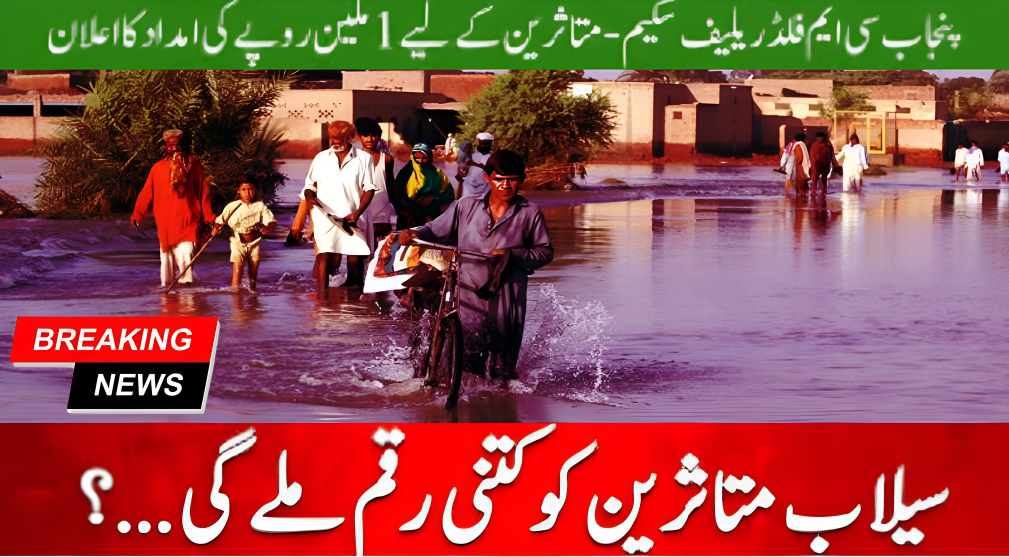
Flood Rehabilitation Program (Punjab) 2025,Floods have always been a major challenge for Pakistan, particularly in Punjab, where rains, overflowing rivers, and heavy monsoon rains cause stress and problems every year. After the catastrophic floods of 2022, the government of Punjab prepared a sustainable, strong, and long-term strategy – the Flood Rehabilitation Program (Punjab). The program is multi-dimensional in nature and not limited to relief but also includes infrastructure development, housing reconstruction, agricultural support, health services, and economic recovery.
Also Read: Ramadan Package 2026 Punjab: Eligibility, Registration, Cash & Ration Benefits
Table of Contents
- 🎯Background and Importance of Cotton Production Enhancement Program 2025
- ✨Core Objectives of Flood Rehabilitation Program (Punjab) 2025
- 🌟Program Structure and Phases of Flood Rehabilitation Program (Punjab) 2025
- 📌Key Components of Flood Rehabilitation Program (Punjab) 2025
- 💥Impact on Communities and Local Economy
- 🚧Challenges and Limitations to Flood Rehabilitation Program (Punjab) 2025
- 📈Long-Term Vision of the Flood Rehabilitation Program (Punjab)
- 👉Conclusion
Also Read: Suthra Punjab Scheme 2026: Eligibility, Application & Latest Updates
🎯Background and Importance of Cotton Production Enhancement Program 2025
Every year, during monsoon season, Punjab experiences torrential rains and when extreme climate events occur, a given province will ultimately have flooding. This flooding disrupts and damages rural communities, agricultural land, irrigation systems, roads and other services like electricity, schools and health services. Flooding in Punjab in the last decade (as worsened by climate change), has led to significant destruction to both life and property, farm animals, crops, and infrastructure.
Understanding the devastation that flooding in the province has caused, the Punjab Government established the Flood Rehabilitation Programme (Punjab) in order to centrally organise all flooding recovery efforts under one co-ordinated multi-phased plan. The Flood Rehabilitation Programme is about immediate relief but it is also about sustainable rehabilitation, climate resilient reconstruction and risk reduction for future flooding disasters. Its framework is integrated into provincial government departments and agencies (including NDMA and PDMA); multi-development partners; and community.
✨Core Objectives of Flood Rehabilitation Program (Punjab) 2025
The Flood Rehabilitation Program (Punjab) 2025 provides a number of strategic objectives of priority to support rapid recovery and build long-term resilience.
- ✅Recovery of Critical Infrastructure
The Flood Rehabilitation Program (Punjab) 2025 will specifically focus on recovering:
- Roads and bridges that have suffered damage
- Irrigation channels, embankments and protective bunds
- Water supply and wastewater systems
- Public buildings (schools, colleges, health centres and community halls)
- The recovery of these systems will be to the standards necessitated by good engineering practices and climate resilient standards, in order to minimize the risk of future losses.
- ✅Recovery of Livelihoods and Economic Recovery
Flood Rehabilitation Program (Punjab) 2025 are very destructive and can create losses of standing crops, livestock and machinery. The program will support the recovery of livelihoods by:
Providing seed, fertilizer and other agricultural inputs to restore livelihoods quickly
- Providing compensation for livestock losses
- Recovering small businesses
- Providing opportunities for upskilling and training in development of employment for affected workforce
- Recovering local economies is important to lessen the future demand on external support, and to recover people.
Also Read: CM Punjab Sehat Card Scheme 2026 – Complete Guide, Benefits & Eligibility
- ✅Assistance for Housing and Shelter Reconstruction
Amongst the impacts of flooding, the loss of shelter is the most evident impact. The program will provide assistance for:
- Rebuilding partially and fully damaged homes
- Technical assistance in the construction of disaster-resilient housing solutions
- Community-driven reconstruction support
- ✅Recovery of Social Services
Education, health and social services are disrupted by flooding. The Flood Rehabilitation Program (Punjab) 2025 will focus on:
- Rehabilitation of schools
- Continuity of medical services and mobile health clinics
- Psychosocial support for families affected by flooding
- ✅Disaster Risk Reduction (DRR) and Future Preparedness
To reduce the decline of loss in future floods, funding for the program will support:
- Improvement of Early Warning Systems
- Enhancements of river embankments and flood channels
- Community awareness programs
- Climate adaptive land use planning
This component is meant to transition the province from a response-based model of disaster management to a preparedness-based model.
🌟Program Structure and Phases of Flood Rehabilitation Program (Punjab) 2025

TThe Flood Rehabilitation Program (Punjab) 2025 is being organized by way of a multi-phase intervention to make it efficient and transparent.
Also Read: Mera Pakistan Mera Ghar (MPMG) Scheme 2026 – Complete Guide & Benefits
✅Phase 1: Emergency response and immediate relief
Flood Rehabilitation Program (Punjab) 2025 occurs during and immediately after flood waters have receded with the actions only permitted being:
- Search and rescue
- Temporary shelter provision to families displaced from flooding
- Food and drinking water distribution
- Establishing medical camps and delivering emergency health interventions
- Waste clearance and restoration of vital services
Flood Rehabilitation Program (Punjab) 2025 is not only time sensitive with regards to the response imperative, but also is the mechanism by which the rehabilitation recovery phase of the program will be launched, as it will systematically record and collate information on damage and suffering.
✅Phase 2: Assessment of damage and needs
The damage and needs assessment will be conducted by PDMA, local administration, and relevant line departments and may identify among other items:
- Household effects
- Agricultural land conditions
- Public infrastructure condition (roads, power and water supply)
- Livestock condition and or crop loss
- Environmental damage
Emerging digital and mapping technologies, drone technology, and or GIS technologies might be implemented to improve reliability and accuracy.
Also Read: Benazir Kafalat Program Re-Application 2026 – Complete Guide
✅Phase 3: Remediation of Housing and Household Reconstruction.
In this phase Flood Rehabilitation Program (Punjab) 2025, families that lost housing receive localized support. The program may provide:
- Direct financial assistance
- Building supplies
- Patters for safe and durable housing
- Verification by a third party for accountability
Low income families, widows, and households with disabled or the elderly are prioritized.
✅Phase 4: Infrastructure Rehabilitation and Climate Change Resilient Reconstruction
This is the most resource heavy phase. Major steps could include:
- Rebuilding large roadways with improved drainage
- Reinforcing river edges and drainage for irrigation
- Bridges built that could withstand flooding.
- Improving a stormwater management system for urban centers
- This change will reduces vulnerabilities in the future.
✅Phase 5: Restoring Livelihoods.
Floods threaten the economic stability for entire communities. In recovering livelihoods, the program could include:
- Agricultural subsidies
- Interest free loans for farmers and businesses
- Training on modern farming techniques
- Assistance with machinery to leveling and re-cultivate land
- Market access for rural businesses
The overall goal would be to stabilize the communities faster with less recovery time.
Also Read: Flood Rehabilitation Program (Punjab) 2025 https://billclarkfoundation.org/maryam-nawaz-announces-rs-1000000-relief/📌Key Components of Flood Rehabilitation Program (Punjab) 2025
Apart from phases, the Flood Rehabilitation Program (Punjab) 2025 also has certain thematic elements:
Multi-Sectoral Coordination
All sectors such as agriculture, health, education, irrigation, and housing all work in a location-specific provincial coordination mechanism to prevent duplication and waste of resources.
Community Participation
Local communities take part by:
- Identifying needs
- Implementing reconstruction projects
- Monitoring projects’ implementation
- Distributing resources fairly
Community ownership of the Flood Rehabilitation Program (Punjab) 2025 supports sustainability of interventions.
Public-Private Partnerships (PPP)
A number of reconstruction activities include:
- NGOs
- Private companies’ CSR work
- International donor agencies
- Development banks
These types of partnerships are beneficial for inducing high-level technical assistance, as well as financing.
Also Read: CM Punjab Government Jobs 2026 – Complete Guide & Latest Vacancies
Monitoring, Transparency, and Governance
To ensure accountability, the program uses:
- Digital dashboards
- Independent auditing
- Satellite imaging to monitor the progress of projects
- Social media reporting to give individuals public visibility
- Such governance systems reinforce public trust.
💥Impact on Communities and Local Economy
The Flood Rehabilitation Program (Punjab) enlivens societal and economic benefits throughout the Province:
✅Restoring Rural Agriculture
- Agricultural inputs, machinery assistance and improved irrigation resuscitate agricultural productive capacity and food security.
✅Support for Vulnerable Families
- Housing grants and health service and social welfare programmes support families who otherwise would not have been able to reconstruct.
✅Enabling the Affected Population to Return in Safety, Dignity and Sustainability
- Infrastructure and services will be restored in a manner that allows families to return with safety and dignity.
Also Read: 11th Class Result 2025 – Check Online & Gazette Downloads (All Boards)
✅Improving Climate Resilience
- Restored embankments, improvements to drainage and new early warning technology contributes to improvement and reduced risk, while also developing community climate resilience to endure longer term.
✅Revitalizing Local Economies
Reconstruction creates:
- jobs
- demand for construction products
- re-establishment of local supply chains
This spawning process creates an economic recovery that go beyond the directly affected.
Also Read: Don’t miss a Single Update https://merischeme.site/🚧Challenges and Limitations to Flood Rehabilitation Program (Punjab) 2025
Despite its size, the Flood Rehabilitation Program (Punjab) 2025 is affected by:
- ✅Size of the Damage
Some years, with extreme flooding, the numbers of households affected, along with the damage to the built environment, increases to such a degree that resources to assist may be insufficient.
- ✅Access
Reaching all remote, or riverine areas can be challenging, causing delays in support and rebuilding efforts.
- ✅Funding
Rehabilitation will require large amounts of funding, and competing priorities of other sectors may put pressure on standalone budgets provided for provicned and community support.
- ✅Unknown through Climate Change
Unknown weather events and patterns are challenging for planning purposes. Events (and floods) of the future may vary significantly in size and pattern from storms considered to be or predictably significant events from the past.
- ✅Coordination, Governments, or Governance gaps
A number of agency stakeholders (governments, non-government, and institutions) can be challenging to coordinate for needed assessments and projects, making strong monitoring a necessity.
Also Read: CM Punjab Internship Program 2026 – Agriculture Sector Opportunities
📈Long-Term Vision of the Flood Rehabilitation Program (Punjab)

The program is intended to be more than an immediate response program, but to be part of a broader shift in systems thinking towards a longer-term climate resilience aim for:
- A disaster-resilient Punjab
- Institutional capacity, infrastructure and effective flood management practices
- Climate-resilient agriculture and infrastructure practices
- Safe settlements and diaspora, community safety (or support)
The program is supportive and aligned with both national disaster management and nationally endorsed response frameworks, and the internationally recognized frameworks such as the Priority Actions (Sendai Framework for Disaster Risk Reduction).
Also Read: Ramadan Relief Package 2026 – Complete Guide & Eligibility
👉Conclusion
Establishing the Flood Rehabilitation Program (Punjab) 2025 is regarded as one of the most meticulously planned and strategic programs that the province has initiated to support community recovery, infrastructure recovery and climate resilience. With the unique approach of merging emergency response with improved planning, the provincial program is a comprehensive disaster recovery model. The program does face challenges such as varying climate uncertainty and financial barriers. additionally, the program sets up a positive multi-phase support process which support the recovery of the community affected and in turn, the province is better able to provide support capacity for any future emergencies.To sum up, the program restores what has been lost, while establishing a program framework to make steps towards resilency, safety, and a safer prepared Punjab.
Who is eligible for the Flood Rehabilitation Program in Punjab?
Families whose houses, crops, or businesses were damaged by floods, and individuals officially listed as flood-affected by district administrations are eligible for the program.
What type of financial support is provided under this program?
The program offers financial aid for house reconstruction, crop compensation, livestock support, business recovery grants, and interest-free loans for small farmers.
Will farmers receive compensation for crop losses?
Yes. The Punjab government provides crop compensation, seeds, fertilizers, and machinery support to help farmers quickly restart agricultural activities.
Are businesses included in the rehabilitation plan?
Yes. Flood-affected small and medium businesses receive grants, interest-free loans, and equipment support to restart their operations.
Will livestock owners receive help?
Livestock owners can receive feed, veterinary care, and compensation for lost animals under the livestock restoration plan.